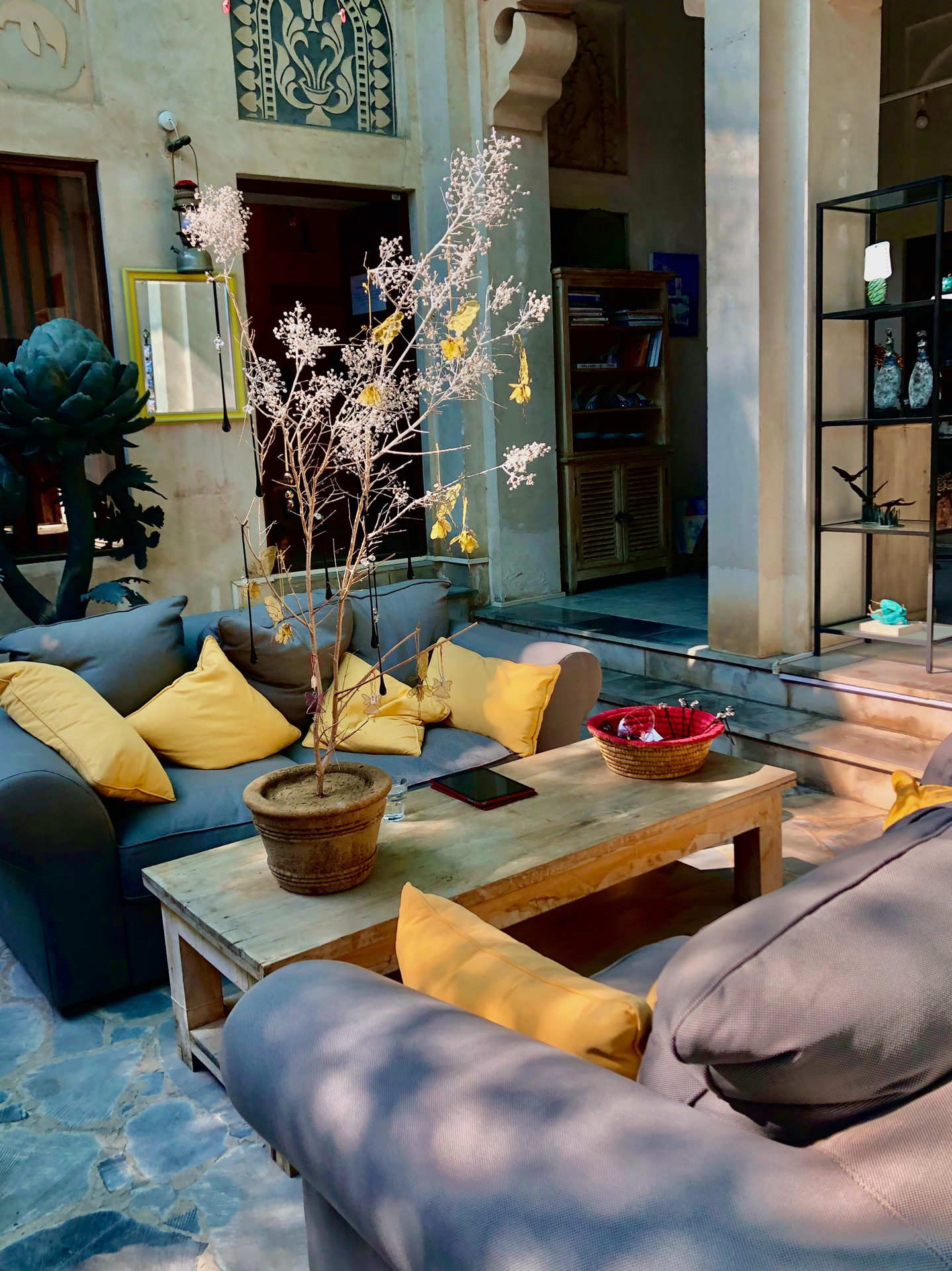

The appeal of a sectional is not just extra seating. Its geometry can organize a room by giving people a natural place to sit, face one another, and relax.
Create a social anchor
An L-shaped sectional can form two connected seating directions. Add a chair opposite the shorter side if you need more face-to-face interaction.
Define open-plan zones
Positioning the back of a sectional toward another function can separate living, dining, or work areas without a partition. Use a rug to reinforce the boundary.
Protect circulation
Do not let the return or chaise become a barrier between key doors. A few centimeters of clearance can make a large difference to daily movement.
Plan for lounging
Deep seating is attractive for relaxed use, but consider the seat height and back angle. Everyone in the household should be able to sit comfortably, not only recline.
Keep flexibility in mind
If the room may change, consider modular pieces. Reconfiguration can make a sectional more useful over time.
sofa.us/ takeaway: Choose the sofa and room strategy that fits the way you actually live. The strongest design decisions balance comfort, proportion, durability, and visual character rather than chasing a look in isolation.