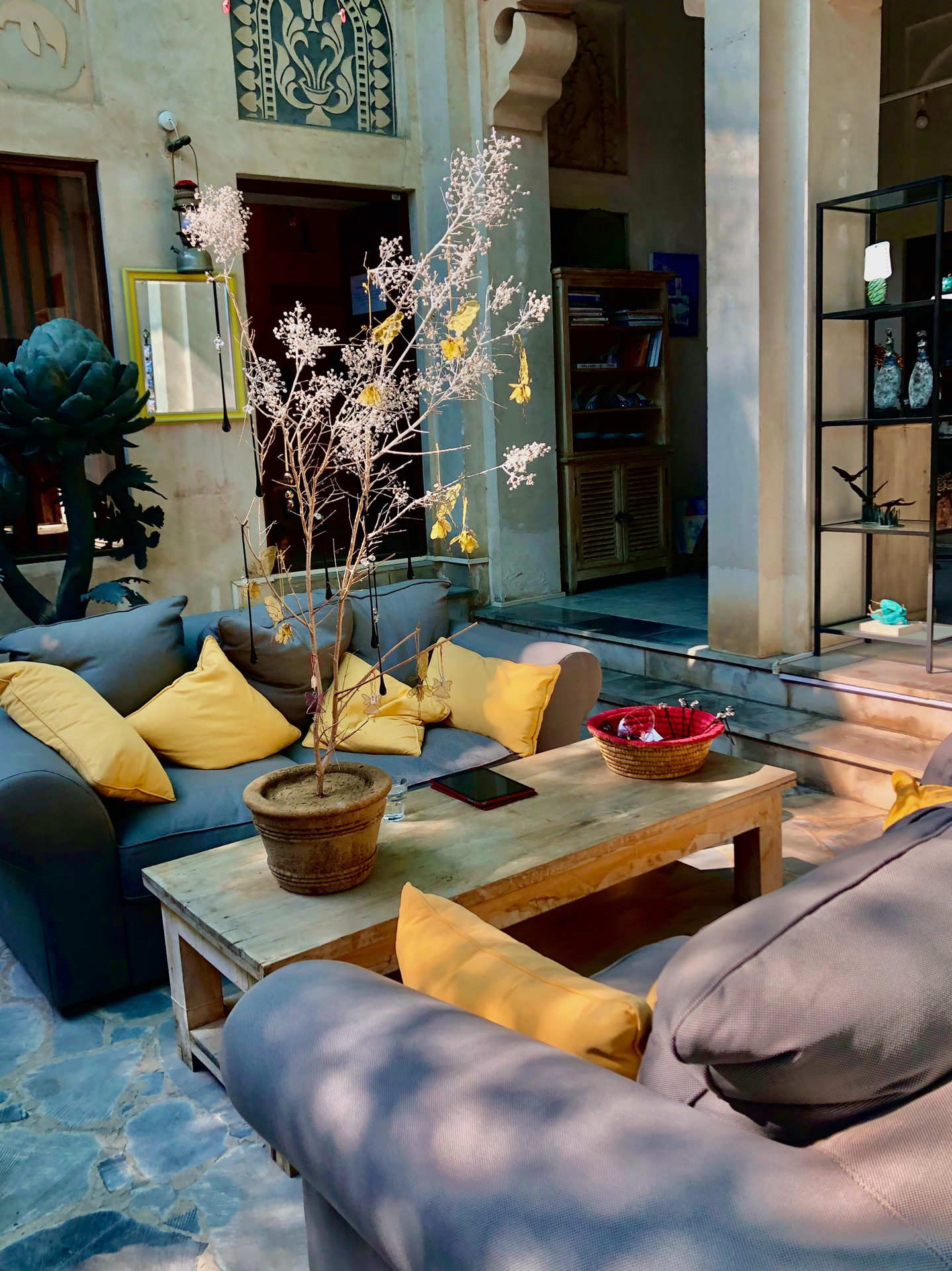

Small-space sofa shopping rewards precision. A difference of a few centimeters can determine whether a sofa leaves a usable walkway or turns the room into a maze of furniture.
Measure the room and route
Record wall width, ceiling height, door openings, stair turns, elevator dimensions, and the depth of the entry path. Measure the intended sofa location separately from the delivery route.
Watch arm and back thickness
Two sofas with the same overall width can offer very different usable seating. Slim arms and a relatively compact back can preserve seating capacity without increasing the footprint.
Consider raised bases
A sofa with visible legs can reveal more floor and create a lighter visual effect. It will not create physical space, but it can make a compact room feel less crowded.
Use flexible tables
A round coffee table, nesting tables, or an ottoman with storage can serve multiple functions. Choose pieces that can move when the room needs to accommodate guests.
Do not ignore comfort
Compact does not have to mean hard or shallow. Check seat height, depth, back angle, and cushion support before choosing a sofa based only on dimensions.
sofa.us/ takeaway: Choose the sofa and room strategy that fits the way you actually live. The strongest design decisions balance comfort, proportion, durability, and visual character rather than chasing a look in isolation.